
In Deuteronomy 22:11 (KJV), the Bible instructs, “Thou shalt not wear a garment of divers sorts, as of woollen and linen together.” Though written thousands of years ago, this commandment raises intriguing questions about the materials we wear, and the subtle forces that govern their interactions with our bodies. While the spiritual significance of this verse has been widely debated, it invites us to consider the deeper implications of fabric composition in our lives- especially as modern science uncovers the often overlooked frequencies of fabrics.
What are Frequencies and How are They Measured?
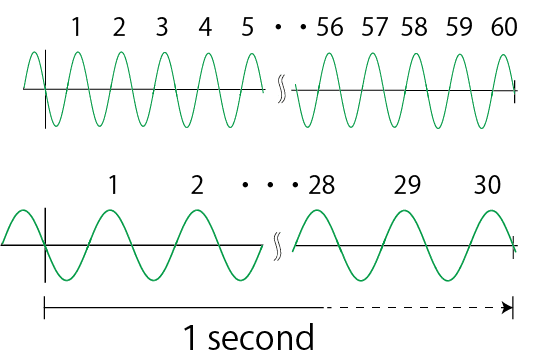
Everything that exists has a frequency. All matter is composed of atoms, which consist of subatomic particles like electrons, protons, and neutrons. The atoms are constantly in motion and have different vibrations that make waves; these waves are what’s known as “frequency.” Frequency is most commonly measured in hertz (Hz); you may also see kilohertz (kHz), megahertz (MHz), and so on. Now that we have a basic understanding of frequency, we can move on to how they affect our bodies.
How do Frequencies Affect our Bodies?
A healthy human body is said to have a signature frequency of about 70-100Hz. While this does not mean each part of our bodies function at 70-100Hz all the time, it is just a generalization of the frequency we carry. There are several different types of frequencies that have the power to impact our health and well being. Electromagnetic frequencies (EMF) have a significantly different affect on bodies than the frequency of atoms. Common EMF’s come from wireless devices, microwaves, and MRI’s, all of which have a negative impact on our health. Frequencies from atoms on the other hand, can have a positive impact on health under certain conditions.
For example, the frequency of fabrics play a huge role on both physical and mental health. Since our bodies sit at around 70-90Hz, any fabric that possess a lower frequency than that will have a negative affect. Contrary, a frequency of about 90Hz or higher will positively impact us. Now, let’s take a look at which fabrics are most beneficial to our health.
What Fabrics to Look for and What to Avoid
A study preformed in 2003 by Dr. Heidi Yellen, found in Hebrews Today, informs us about various fabrics and their frequencies. Yellen used a device called the “Ag-Enviorn Machine” invented by Bob Graham to measure each fabric. Her findings were as follows: Organic cotton: 100Hz, Hemp: 100Hz, Non-Organic Cotton: 40Hz (some sources say 70Hz), Silk: 10Hz, Rayon: 15Hz, and Acrylic, Polyester, Apandex, Nylon, Viscose, and Lycra: 0Hz. Ideally the only fabrics we would wear and keep in our home from this list would be organic cotton, hemp, and possibly non-organic cotton. Obviously buying organic can be costly, so if you can’t afford it I would suggest buying regular cotton and looking for the “OEKO-TEX” label.
Now for the best two fabrics of all: Linen and Wool. Each of these fabrics were found to have a frequency of 5,000. These high frequencies have drastically positive impacts on our physical and emotional wellbeing. Linen, in specific, contains several key, natural properties that are beneficial for everyone. Linen is naturally hypo-allergenic and anti-bacterial, making it great for those who suffer from allergies. It can also soak up to 20% of its dry weight, an optimal choice for those who sweat. In addition, it is an incredibly durable fabric that is resistant to normal tearing, it can withstand being washed in any temperature of water, and it gets softer with each wash! All around a great fabric choice for clothing, bedding, and more.

The last notable topic is how to properly use wool and linen. Each of these fabrics have the same frequency of 5,000. However, when combined, they surprisingly equal out to zero, essentially making these two fabrics useless if you wear them together. The exact reason of this is unknown since there is little research on it, but it can be assumed that one fabric has a frequency that travels right to left, and the other left to right. Thus, leading us back to our original topic, Deuteronomy 22:11.